
Free online course in sound and audio this summer offered by Barry Truax
Following four very successful previous versions of this course, I am offering to mentor another group of participants in a 12 week online course in sound and audio, starting Wednesday May 8 and going to July 31. There is no fee for participating in this group.
We will be systematically going through the Tutorial associated with the Handbook for Acoustic Ecology located on the WSP Database, and covering two modules most weeks, one in acoustics, the other in electroacoustics. We’ll meet once a week on Zoom for 2-1/2 hours to discuss these topics, scheduled for 10:30 am – 1 pm PDT on Wednesdays.
This course will be useful as professional development to those wanting to teach sound and audio, as well as graduate students and others who would like to broaden their knowledge across multiple disciplines. If anyone wants to take the course for academic credit, they need to set this up at their own institution and I would supervise it.
The particular strengths (and challenges) of the Tutorial are the parallel modules in acoustics and electroacoustics that emphasize their often ignored links. I would expect participants to be more experienced in one or the other areas, but this course should allow for imbalances in knowledge to be addressed.
The Tutorial and Handbook files can be downloaded by each individual for ease of access, but participants can also use the online version. The preferred browsers are Safari and Firefox (Catalina OS and Chrome also seem to work). Additional software for experimentation will be made available.
Those interested who have the time (I estimate you will need a minimum of 6 hours a week for the webinar and individual study if you want to take it all in), apart from whatever time would be spent with the personal listening and studio experiments), please contact me at truax@sfu.ca, if you have any questions or would like to view the Tutorial in advance, which I recommend.
For those in the Pacific region and its time zones, this year for the first time, I have arranged a parallel version of the course, hosted by Jesse Budel from Australia who will present the same topics with my recorded audio and the same Tutorial material. As a freelance individual, he will need to charge a fee for this service. Those interested should contact him directly at: budeljesse@gmail.com
Barry Truax (truax@sfu.ca)
Professor Emeritus
Simon Fraser University
Journal of Sonic Studies: New issue online - Ethnographic rubbish
Guest Co-Editors: Jonathan Larcher and Heikki Wilenius
Additional contributors: Ernst Karel, Harsha Menon, Julie Métais, Sandro Simon, and Victor A. Stoichiță
What can be considered as a discarded recording in an ethnographic inquiry? Do the instabilities and technical errors that may occur in recordings show that technology is an inextricable part of the encounter of ethnographic situations? Furthermore, is there a limit beyond which a sound is too degraded so it can no longer be restored, and instead can only be described in writing, the preferred medium of the human sciences in general and anthropology in particular? The contributions – six written essays, one video essay, and one conversation – offer a range of answers to these three questions, proving that sonic rubbish is worthy of scholarly attention. By approaching the issue of failed or deficient ethnographical recordings from different perspectives and different subdisciplines in anthropology, the ensuing contributions critically engage with discarded audio materials and in so doing challenge the long-standing emphasis on clarity and precision in field recordings.
New Book review online

Earshot: Perspectives on Sound - Bruce Johnson. Milton: Routledge, 2023
Book review by Kevin Toksöz Fairbairn
New Book review online
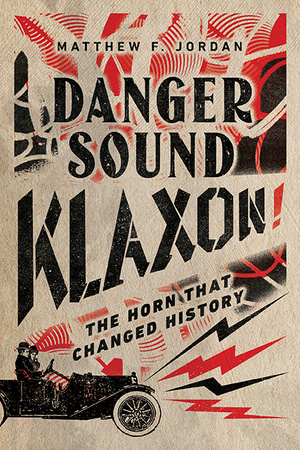
Book review by Alexandra Supper
|

|
|
|
New Book review online

Book review by Paolo Dantas
New Book review online

Book review by Sharon Stewart
New book on radio by Carolyn Birdsall
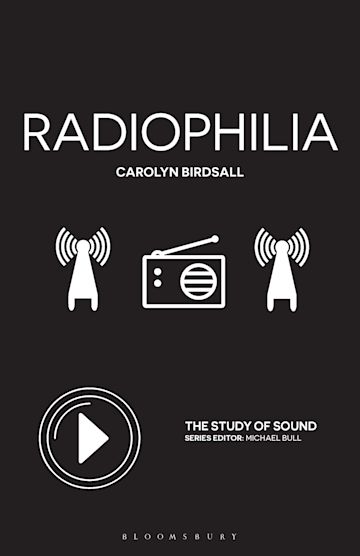
Carolyn Birdsall published a new book, Radiophilia, in Bloomsbury’s The Study of Sound series.
Inspired by a century of radio, Radiophilia explores the love for radio, from early wireless to digital audio today, and treats it as a global and dynamic phenomenon. It brings together radio/podcast studies with critical perspectives on fans, affect & emotion, memory, heritage & archives, material culture, infrastructures, technology & design.
Bloomsbury will officially release the book this coming Thursday 21 September, and until then, there’s a 10% pre-order discount available for the paperback, hardback & ebook editions (https://www.bloomsbury.com/uk/radiophilia-9781501374968/).
And if you’re based in/around Amsterdam, please ‘save the date’ for the launch event, which will take place on Tuesday 21 November, 17:30-19:00 at Spui25, Amsterdam.
New Book review online
The Performative Power of Vocality - Virginie Magnat. New York: Routledge, 2021

Book review by Tina Stefanou
New book review online
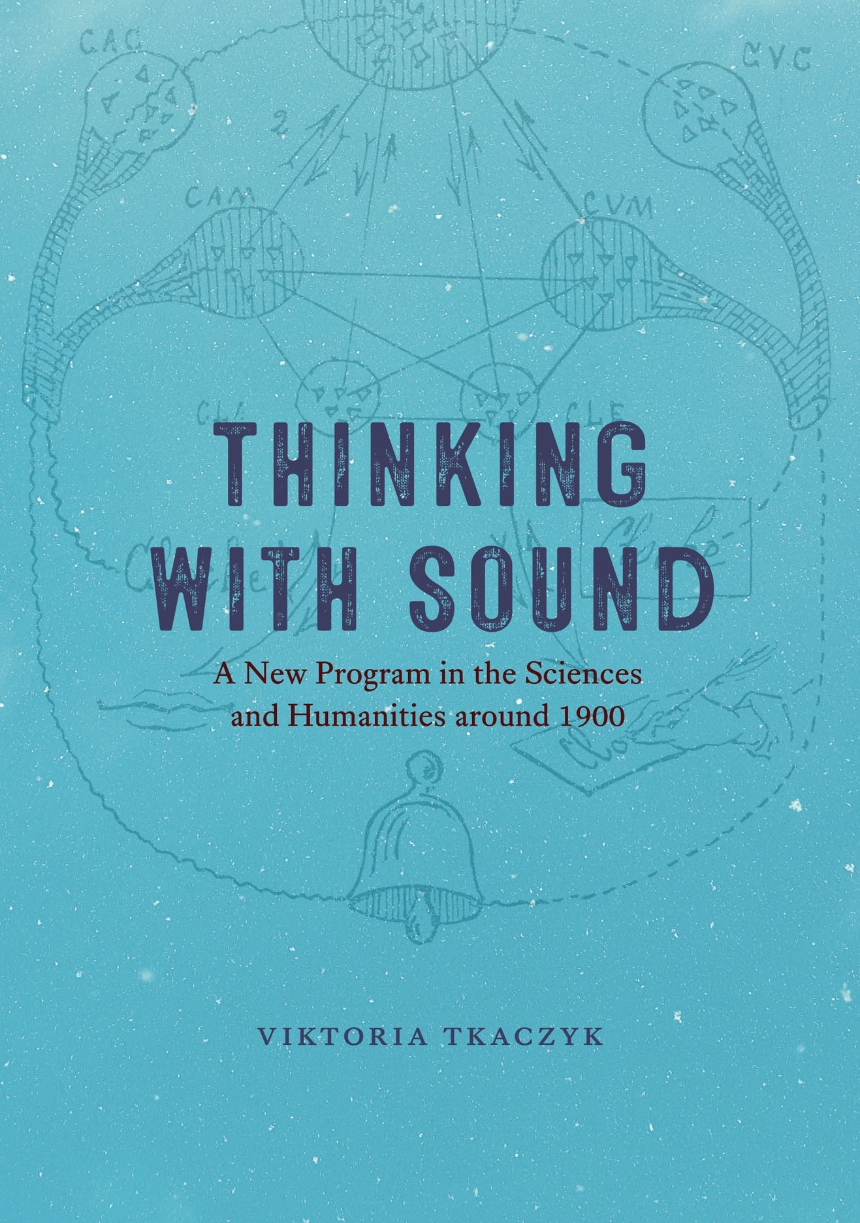
Book review by Joeri Bruyninckx
New book review online
ECHO – Amit Pinchevski. Cambridge, MA: MIT Press, 2023
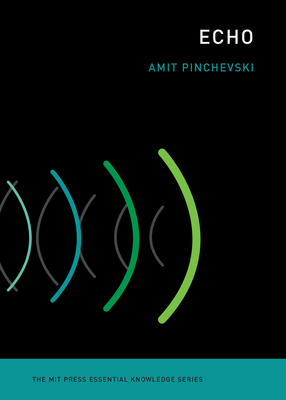
Book review by Mark Peter Wright
New Book review online
Uncurating Sound: Knowledge with Voice and Hands - Salomé Voegelin. New York: Bloomsbury 2023
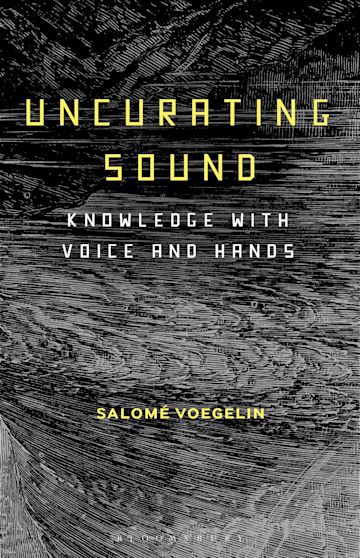
Book review by Ben Byrne
Seminar Polyphonic Landscapes

ArtEZ Professorship Theory in the Arts in collaboration with Zone2Source (platform for art, nature, and technology based in Amsterdam) are pleased to invite you to the second seminar of the artistic research project Polyphonic Landscapes on Wednesday June 14th (12:00 – 17:00). The event will take place live in the Orangerie in the Amstelpark.
Admission free, registration required: Registration form
Polyphonic Landscapes is an artistic research programme on sound and ecology in which 4 international artists explore the Amstelpark during a series of residencies in the Park Studio:
Budhaditya Chattopadhyay (IN/NL)
Yolande Harris (UK/US)
Teemu Lehmusruusu (FI)
Lia Mazzari (IT/UK)
Their research will result in an exhibition in and outside Het Glazen Huis in the fall of 2023. For more information and the broader context of Polyphonic Landscapes, please see: https://polyphoniclandscapes.artez.nl/
CIRCULAR SEMINAR
During this second seminar of Polyphonic Landscapes, the four participating artists will engage in a circular and participatory setting to share and discuss the key concepts of their research with the audience. The event encourages social dialogue, co-discussion, and co-thinking and will feature indoor sessions held in the Orangerie, interspersed with soundwalks and immersive listening exercises in the surroundings of Amstelpark.
The programme (see schedule below for more details) consists of four 'circles', each of which will be curated and led by one of the artists.
[12.00 - 12.15] Word of introduction
[12.15 – 13.15] In his research project The Pulse (at Amstelpark) (working title) Teemu Lehmusruusu aims to examine the surroundings of the Amstelpark by measuring environmental data and taking these measurements as a starting point for creating sonic sculptures act as ‘soil guards’, connecting to the dynamics of the soil-atmosphere-relation and collecting the environmental data on site in an exploratory mode. The intention of the data-gathering in this context is not to build scientific models, but to reach out to a bodily and experience-based way of knowing our interconnectedness with the natural world. In the seminar’s first circle, titled ‘The Soil Cycle’, Lehmusruusu invites you to engage with both an inner contemplation and a shared dialogue on the relationship with the Earth’s body of soil.
[13.15 – 14.15] For Polyphonic Landscapes: Hydrophile, Lia Mazzari explores how live audio streaming engenders different modalities of being and listening with environments. At a time of digital saturation and accelerating planetary crisis, her project investigates the affordances and limitations of live audio streaming, making contributions to creative discourses on environmental sound and developing new creative/compositional strategies for engaging audiences in listening events. During Lia’s circle we will engage in a listening exercise with live audio streams followed by a discussion in the Amstelpark.
-- Bring your own smartphone with data connectivity and a decent pair of headphones! --
[14.15 – 14.45] Break
[14.45 – 15.45] In Co-sounding: Towards a Sonorous Land Budhaditya Chattopadhyay delves into an sonically empowered intervention into the landscape, focussing on the site of the Amstelpark, which is a man-made nature, much like the canonical landscape paintings this project focuses on in order to unpack notions of mediation, rendering, and Anthropocenic appropriation of land into spectacle. The project intends to inculcate a dialogic context within which an intersubjective approach to the perception of land as an equitable habitat of human and non-human lifeforms is developed. This approach of reciprocity and intersubjectivity helps to counteract the nature-culture binary with ambient and environmental aesthesis. The complacent and stagnant landscape paintings of the colonial era are reread and deconstructed sonically, thus making them susceptible to questions of decoloniality, Anthropocene, politics of the senses, rights of nature and ownership of land.
[15.45 – 16.45]
In the final circle Vertigo and the Sound Portal Yolande Harris invites us to explore states of sonic reorientation through the vertiginous experience of a sound portal. Harris writes: 'How do we experience an overlaying of the sound of two places at once? Presence over distance, one environment augmenting another through sound, the potential for increased connection and empathy. I have become fascinated by such an expanded perception and the idea of a ‘sound portal’. A sound portal - the transition from sensing one place to simultaneous places - encourages a heightened sensitivity and relational reorientation, facilitated by sound and listening.'
[16.45 – 17.00] Wrap up.
New Book review online

Book review by Søren Møller Sørensen
New Book review online

Book review by Marcel Cobussen
SOUND ON SCREEN II - HYBRID CONFERENCE, OXFORD BROOKES UNIVERSITY, 5th-6th JULY 2023 | CALL FOR PAPERS
DEADLINE FOR SUBMISSIONS: FRIDAY 24th MARCH 2023 (23:59)
Please submit an abstract of no more than 300 words, an indication of whether you would prefer to appear in person or online, and a brief biography of no more than 150 words to soundonscreen@outlook.com by March 24th 2023.
The second Sound on Screen conference welcomes submissions for 20-minute papers from scholars and practitioners that explore the relationship between music and/or sound and the screen. We welcome submissions from speakers at any career stage (including postgraduate MA or PhD candidates) and from a wide range of disciplines such as musicology, film and television studies, cultural studies, communications studies and so forth. The first Sound on Screen conference invited participants to take their cue from Chion (1994) and Mera et al. (2017) in drawing together ‘different practices and technologies under the same umbrella without attempting to obfuscate the differences that exist between them’. This resulted in a diverse range of topics and speakers, and allowed us to create interdisciplinary panels that brought different fields and viewpoints into fruitful dialogue with each other. We intend the second Sound on Screen conference to continue this rich discussion and so in addition to inviting any relevant paper proposals, we particularly welcome submissions that engage with the interplay between sound and music on screen, and also considerations of equality, diversity and inclusion in relation to music and sound on screen. This conference will be held in person at our Headington campus in Oxford, but hybrid options will be available to presenters and delegates.
Topics might include, but are not limited to:
• Music and sound in narrative film and/or television
• Music and sound in documentary forms
• Music and sound in videogames
• The absence of music and sound in film and television
• The relationships between music and sound
• EDI and screen industries
• Gendered music on screen
• Music and sound in animated film and television
• Audience engagement with music and sound on screen
• Sound on screen as practice: composers and/or sound design
• Sound effects and/or noise on screen
• Pre-existing music and sound on screen
The programme committee may, at our discretion, extend the conference to three days if demand deems it appropriate. If your paper is accepted, we will provide the opportunity to select your preferred presentation day, including the potential third day.
The programme committee consists of Dr. Jan Butler (Senior Lecturer in Popular Music, Oxford Brookes University), Dr. James Cateridge (Senior Lecturer in Film, Oxford Brookes University), and Dr. Matt Lawson (Senior Lecturer in Music, Oxford Brookes University), and Dr. Lindsay Steenberg (Reader in Film Studies, Oxford Brookes University).
The Conference is organised with the support of the Centre of Research in the Arts (CoRA)
Further information can be requested by contacting soundonscreen@outlook.com
Details of the first Sound on Screen conference can be found at Sound on Screen 2021.
Polyphonic landscape - Save the date
ArtEZ Professorship Theory in the Arts in collaboration with Zone2Source (platform for art, nature, and technology in the Amstelpark, Amsterdam) are pleased to invite you to the online opening seminar of Polyphonic Landscapes on Thursday 16 March 2023, 12:00 – 17:00.
(Admission free, registration required: polyphoniclandscapes.artez.nl)
Polyphonic Landscapes is an artistic research programme on sound and ecology in which 4 international artists explore the Amstelpark during a series of residencies in the Park Studio:
• Budhaditya Chattopadhyay (IN/NL)
• Yolande Harris (UK/US)
• Teemu Lehmusruusu (FI)
• Lia Mazzari (IT/UK)
Their research will result in an exhibition in and outside Het Glazen Huis in the fall of 2023.
Online opening seminar
In this first seminar, the participating artist-researchers will present their projects, after which they will
engage in an interview with an assigned critical friend. Each session will conclude with a Q&A.
Programme for the day:
12.00 – 12.15 Word of introduction
12.15 – 13.15 Budhaditya Chattopadhyay in dialogue with Sharon Stewart
13.15 – 14.15 Teemu Lehmusruusu in dialogue with Alexandra Supper
14.15 – 14.45 Break
14.45 – 15.45 Yolande Harris in dialogue with Ximena Alarcón
15.45 – 16.45 Lia Mazzari in dialogue with Ximena Alarón
Zoom link will be sent in time after your registration.
Landscaping
A growing number of scientists, scholars and artists agree that we have entered the Anthropocene, a geological era in which humankind has become a major force in shaping the Earth. In this context the concept of landscape acquires a new urgency, as well as a new meaning: Where landscape historically has often been thought of as a picturesque vista or a passive backdrop for human protagonists, contemporary artists and theorists conceptualize landscape not so much as a noun but as a verb. The latter expresses a continuous flux of becoming in which both human and more-than-human agencies are entangled in a polyphony of 'world making', i.e., landscaping.
Listening as research
In the artistic research project Polyphonic Landscapes sound artists Budhaditya Chattopadhyay (IN, NL), Yolande Harris (UK, US), Teemu Lehmusruusu (FI) and Lia Mazzari (IT, UK) enquire into the question of how sound and the act of listening can contribute to a more active understanding of landscapes. In other words: How can our sense of hearing foster a more embodied, inclusive, relational, and reciprocal connectivity to our environment, the latter being ecologically understood as a process in which various life forms, materials, energy flows and temporalities are involved?
The underlying goal of the project is to gain more insight into how artistic research(-ers) produce new entrances to layers of knowledge that are not, or hardly, accessed by regular academic practices. The ways in which the artists give shape to their explorations and how they demonstrate the public aspects of research are an important point of focus.
Polyphonic Landscapes operates at three levels:
1. Sonic research into the urgent relation between nature and culture
2. Research into the agency of both theory and practice in artistic research
3. Research into the ecology of the senses and the multisensorial
Researchers and location
In Polyphonic Landscapes these questions will be explored by four internationally acclaimed sound artists. Their one-year-long artistic research will result into the creation of new sound works that facilitate embodied and situated ways of knowing and experiencing landscapes. To foster a fruitful cross-pollination between artistic practice and critical theory, researchers of the ArtEZ Professorship Theory in the Arts (led by Peter Sonderen, project leader Joep Christenhusz) and Zone2Source director Alice Smits will act as a theoretical sounding board, alongside other experts.
The artists will focus their research on the specific landscape of the fifty-year-old Amstelpark where Zone2Source is located. The Amstelpark, designed for the Floriade in 1972, is a hybrid environment in which the urban and natural are closely intertwined. The proceedings of their investigations will be shared during three public research seminars. To conclude the project, the connected sound works will be exhibited by Zone2Source from mid-September through mid-November 2023.
National Research Agenda (NWA)
Polyphonic Landscapes is part of the Art Route NWA-project Bit by bit, or not at all within the scheme ‘Small Projects’ which is financed by the Dutch Research Council (NWO). In this project several cluster questions will be addresses that were posed by the National Research Agenda. For instance: ‘What is quality of life?’ and ‘What does art mean to people?’.
Polyphonic Landscapes seeks to find new perspectives on these questions by means of artistic research that inquires after the relationship between nature and culture, and the position of the human and non-human in particular. It endorses the NWA Art Route’s view that, in the face of global climate breakdown, art can be an alternative way of knowledge production that sidesteps dichotomies between subject and object, knowing and experiencing, human and non-human, in the face of climate breakdown.
Journal of Sonic Studies: New issue online - Voice and Listening as Techniques for Political Life
https://www.researchcatalogue.net/view/558896/1937426
Guest Co-Editors: Fadia Dakka, Kirsten Forkert, Ed McKeon, Jill Robinson and Ian Sergeant
Contributors:Ximena Alarcón-Díaz & Ed McKeon, Sarah Amsler, Kate Lacey, Sipho Ndlovu and Ryan Sinclair, Rajni Shah, Rodrigo Toro and Donovan Hernández, and Tom Western.
We are launching today this special issue of the Journal of Sonic Studies on ‘Voice and Listening as Techniques for Political Life’: a forum for contributions across cultural studies, performance studies, political geography, social science, deep listening, sound art, and performance poetry.
When we staged our one-day symposium on this topic at Birmingham City University in March 2021, we were marking the anniversary of the UK’s first lockdown during the global pandemic. With tens of thousands of unnecessary deaths already recorded and unbearable strain on hospitals, doctors, and other public services, it felt urgently important to take time out with others to both gain a better understanding of the current situation as well as to discover strategies for action and renewal.
Perhaps it was the enforced isolation and withdrawal from public space that prompted our attention towards matters of voice and listening. Congregating with others had been restricted by law. Social media began to function as a kind of proxy or ersatz political arena, yet this mediation of everyday political practice brought with it a host of distortions. . As we know only too well, algorithms amplify some opinions and diminish others, demanding our prolonged attention with distractions, rage, and outrage.
We are grateful to the editors of the Journal for giving us this opportunity to pause and reflect further, to invite a global array of contributions, and to share this with a broader public. This is an urgent discussion to be had and we invite you to take part. In addition to reading and listening to the different pieces, do join us for our live hybrid launch event on Friday 10 March, 4-5:30pm GMT (face-to-face at BCU and online on Zoom). Communication is not a one-way street and we want to listen and hear your thoughts as well as to embrace practices of voicing and listening that reflect the values that this special issue is designed to promote.
Online: https://www.eventbrite.co.uk/e/journal-of-studies-special-issue-launch-online-tickets-537829712147
Assistant Professor in Sound Studies and Sound Art (0.2 FTE)
The Academy of Creative and Performing Arts (ACPA) is looking for a Assistant Professor in Sound Studies and Sound Art. ACPA is one of the seven institutes of Leiden University's Faculty of Humanities, and originated from a partnership with the University of the Arts The Hague. One of the new ACPA initiatives is to establish a Sound Studies Center which will concentrate on four key topics: the development of the discourse around sound; creating sound artworks; consultancy work on sound policies; education in and through auditory culture.
Key responsibilities
The new Assistant Professor will take on the following responsibilities commensurate with career stage:
- co-developing a newly established Sound Studies Center
- further developing the discourse on sound studies and sound art
- developing sound artworks and/or helping to facilitate sound art in and around Leiden
- stimulating the role of sound artists in the (re)designing of public (urban) places
Selection criteria
The candidate we are seeking:
- has a PhD in sound studies, sound art, or a field relevant for this position
- has a good overview of contemporary practices and discourses on sound and sound art
- has published on sound and sound art
- has demonstrable experience in organizing sonic events
- has experience in applying for grants and other forms of subsidies
- can act as a co-supervisor of PhD candidates in sound art/artistic research
- has good proficiency in English and preferable also the Dutch language
- is ultimately able and willing to teach a course on sound studies and sound art
Furthermore:
- Non-Dutch-speaking candidates will be required to acquire proficiency in Dutch to level B1 within two years of taking up the appointment. The candidate must demonstrate sufficient progress toward attaining this level of Dutch acquisition by the time of the probationary review. The institute facilitates Dutch-language learning with reimbursement of costs and teaching relief for an approved training programme;
- Upon appointment, depending on experience and formal qualifications, the successful applicant is required to obtain a nationally recognised University Teaching Qualification (BKO); the candidate must demonstrate sufficient progress toward the attainment of the BKO by the time of probationary review.
Our Faculty/Institute
The Faculty of Humanities has a wealth of expertise in fields of philosophy, history, art history, the arts, literature, linguistics, religious studies, and area studies of virtually the entire world. The Faculty offers staff and students from the Netherlands and abroad an inspiring international working environment and opportunities for diversity and innovation. The research at the Faculty is organised within seven institutes More detailed information can be found on the website of the Faculty of Humanities.
ACPA is a research institute of the Faculty of Humanities at Leiden University. In addition to research in and through the arts, ACPA offers academic education for art students in The Hague and art education for students at Leiden University. Furthermore, the institute organizes cultural events where art and academia meet. More information about ACPA can be found on its website.
Terms and conditions
We offer a part-time (0.2 FTE, 8 hours per week) post for the period of 18 months from 1 April 2023, or as soon as possible thereafter, with the possibility of a permanent contract conditional on performance and funding. Salary range, depending on training and experience, is from € 3.974,- to € 5.439,- (pay scale 11 in accordance with the Collective Labour Agreement for Dutch Universities) before tax per month, based on a full-time appointment.
Leiden University offers an attractive benefits package with additional holiday (8%) and end-of-year bonuses (8.3%), training and career development, and sabbatical leave. Our individual choices model offers some freedom to assemble a personalised set of terms and conditions. Candidates from outside the Netherlands may be eligible for a substantial tax break. There is a Dual Career Programme for international spouses; for further details, see https://www.medewerkers.universiteitleiden.nl/po/international-staff/social-life-and-settling-in/your-spouses-career---the-dual-career-programme-dcp.
New book reviews online
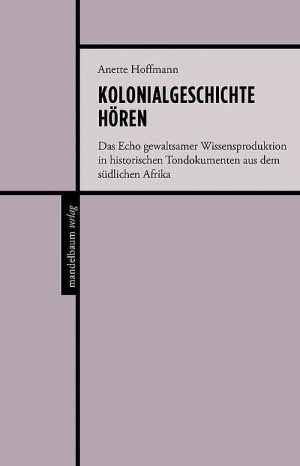
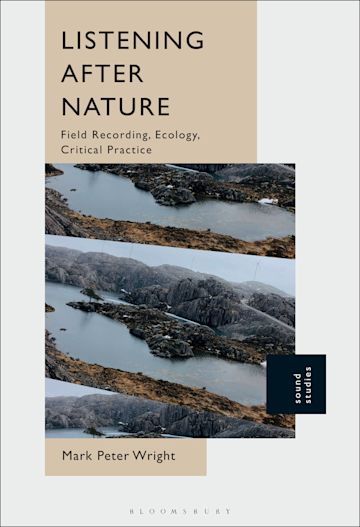
Book reviews by Marcel Cobussen
1st CALL: III International Conference on Sonorities Research (CIPS) – Sounds of the end of the world
Dates: June 07, 2023 to June 09, 2023
Location: Fluminense Federal University – Niterói/RJ – Brazil
During the last decades, global changes that can be threats to human existence itself have emerged – threats caused by ourselves, as theories of the Anthropocene show. Climate change, pandemics, food shortage and wars are the result of brutal economic exploitation of the planet as well as struggles for the control of natural resources and the denial of the ongoing crisis of the planet.
The end of the world, of course, refers not just to nuclear or climate disasters, but also to the end of a worldview, models of knowledge or even cognitive, social or affective patterns. A new world emerges outlining its creative powers and its dystopias of control, automation and extraction of natural resources necessary for technological development.
How do sound and music cultures take part, articulate, face and/or politicize themselves in the face of late capitalism and the Anthropocene? What do certain sounds and certain songs teach us in the face of situations that don't seem to have any other alternative but to accelerate? Which sounds need to be heard, which are being ignored and which denounce the urgency of the end of the world? Last, but not least, what does it mean to listen to the end of the world? In this sense, the III International Conference on Sonorities Research (CIPS) - Sounds of the End of the World seeks to highlight the different sonorous aspects of our relationship with the world and with the transformations through which it has passed.
The III CIPS welcomes proposals for academic presentations and artistic performances. Some of the perspectives, but not the only ones, that interest this conference are:
1. Sound ecologies: Anthropocene, creation and entropy
2. Sound identities: Post-coloniality; Decoloniality; afro-futurisms; Amerindian Perspectivism
3. Technologies and production models: the late capitalism's sound project
4. Collective fear, emotions, media and music
5. Modes of listening, signs and sound affects in times of capitalist realism
6. Struggles, Resistances, Insurgencies: Sound, listening and survival in a world at risk
Submission of abstracts: until December 16, 2022
The 2nd call will soon be published with guidelines and e-mail for submissions.
Journal of Sonic Studies 23 online
The editors of the Journal of Sonic Studies are proud to announce that its 23th issue is online. This special issue of the Journal of Sonic Studies, edited by guest editor Diana Grgurić, brings together scholars and artists in exploring the acoustic culture of the Balkans. From a variety of theoretical perspectives broadly set in the interdisciplinary field of sonic studies, the authors contribute with articles of analytical and artistic provenance, investigating the sonic practices, their perceptions and memories, as well as the socio-political organization of music and sound in this specific geographical region in Europe.
Table of Contents:
Sounds of the Balkan – Editoria - lDiana Grgurić
Soundscapes of Stalinism: Acoustical Experiences in Bucharest in the 1940s and 1950s - Błażej Brzostek
A Spectral Geology - D.A. Calf
Listening against "The Transition" - Theodore Teichman
What is the Affect of a Merry Genre? The Sonic Organization of Slovenian Folk Pop as a (Non)Balkan Sound - Robert Bobnič, Natalija Majsova, and Jasmina Šepetavc
The Right to Polished Sound: Age and Class in the Viennese Balkan Music Scene - Ondřej Daniel
Contextualities of Listening to Soundscapes: The Past and The Present Converging in Sarajevo - Maja Zećo
Сарајево concrète - Lasse-Marc Riek
New book review online
Book review by Ezra J. Teboul
Online course in sound and audio offered by Barry Truax
Following two very successful previous versions of this course, Barry Truax is offering to mentor another group of participants in a 12 week online course in sound and audio, starting May 12 and going to July 28, 2022.
The course will be systematically going through the Tutorial associated with the Handbook for Acoustic Ecology located on the WSP Database, and covering two modules most weeks, one in acoustics, the other in electroacoustics. Meetings will be once a week on Zoom for 2-1/2 hours to discuss these topics, scheduled for 10:30 am – 1 pm PDT on Thursdays.
This course will be useful as professional development to those wanting to teach sound and audio, as well as graduate students and others who would like to broaden their knowledge across multiple disciplines. If anyone wants to take the course for academic credit, they need to set this up at their own institution.
The particular strengths (and challenges) of the Tutorial are the parallel modules in acoustics and electroacoustics that emphasize their often ignored links. Participants may be more experienced in one or the other areas, but this course should allow for imbalances in knowledge to be addressed.
The Tutorial and Handbook files will be downloaded by each individual for ease of access. The preferred browsers are Safari and Firefox (those with the Catalina OS and Chrome are likely to encounter problems). Additional software for experimentation will be made available.
The meeting time will be Thursday morning at 10:30 Pacific time, for North and South Americans, which will be the evening for those in Europe. Unfortunately, it’s doubtful that participants from other parts of the world would be able to participate as easily given the time differences; however, a Pacific Rim version with Susan Frykberg (who is based in Australia/NewZealand) may be available and will involve a modest fee (contact sfrykberg@gmail.com) if you are interested.
Those interested who have the time (you will probably need a minimum of 8 hours a week for study, apart from whatever time would be spent with the personal listening and studio experiments), please contact Barry Truax at truax@sfu.ca, also if you have any questions or would like to view the Tutorial in advance, which is recommended.
New release by Joseph Nechvatal
After having published the decades-spanning cassette retrospective Selected Sound Works (1981-2021) last year, on March 14, 2022, Pentiments is releasing here Joseph Nechvatal’s The Viral Tempest double vinyl LP and Bandcamp tracks.
The audio on the first disk – made in collaboration with Andrew Deutsch – is OrlandO et la tempete viral symphOny redux suite. It uses an anonymous reading of Virginia Woolf's Orlando as a type of sonic signature that Nechvatal’s virus-modeled artificial life audio material reanimates. The second piece, pour finir avec le jugement de dieu viral symphOny plague, serves as a brother suite to the first and instead uses Antonin Artaud's controversial recorded performance of his radio play To Have Done with the Judgement of God as the sonic figure.
The LP is in an edition 200 with a full color gatefold jacket, full color labels, an 11x11" 12-page full color exhibition catalog documenting the paintings featured in Nechvatal’s 2020 Orlando et la tempête art exhibition at Galerie Richard (Paris) and an 8.5x11” insert featuring an interview with him by S.K.G. Noise Admiration.
New book review online
Book review by Vincent Meelberg
ARC Session Sounding Sonic Materialism by Academy of Creative and Performing Arts - Leiden University

On December 6, 2021 Marcel Cobussen hosted a special event in Studio Loos in The Hague (the Netherlands) on Sonic Materialism. Featuring the American trombone player, theoretician, and instrument builder Kevin Fairbairn, the Welsh composer and improviser Richard Barrett, and the Argentinian sound artist and composer Gabriel Paiuk, the event was comprised of 3 lecture-performances (and a brief introduction by Cobussen), exploring how Sonic Materialism can sound, how sound as sound can contribute to a more theoretical discourse on (New) Materialism.
A registration of this event can be found here
New book review online

Podcasting: The Audio Media Revolution - Martin Spinelli and Lance Dann. New York: Bloomsbury, 2019
Book review by Jeremy Wade Morris
Free E-book | Negotiating Noise: Across places, spaces and disciplines
Negotiating Noise Across Places, Spaces and Disciplinesbrings together writing by 20 researchers from across Europe and South-East Asia on the slippery but fascinating topic of noise. What is noise, where can it be heard, and what should we do with it? These questions are answered in very different ways in this book from the perspectives of research in architecture, anthropology, cultural history and theory, ethno- and historical musicology, digital culture, linguistics, medicine, musical composition, sociology, sound design, sound art, and urban planning. Drawing on transdisciplinary conversations at two workshops – one at Lund University and one at the University of Nottingham, Malaysia Campus – the book bridges professional as well as cultural divides. It sets out current research trajectories in the different disciplines involved in researching noise through a series of Position Papers. It also brings these perspectives together through a series of jointly authored Manifestos for the future.
The book can be downloaded via this link:
https://books.lub.lu.se/catalog/view/115/132/1287-1
Sonic Aggregator project by Tuned City and Soundtrackcity

Sonic Aggregator is a collaborative project of Tuned City and Soundtrackcity about ‘sonic placemaking’ hosted by ABA Air Berlin Alexanderplatz at Haus der Statistik in Berlin. With Peter Cusack, Vanessà Heer, Michiel Huijsman, Udo Noll. Sonic Aggregator has been long in the making and postponed several times due to covid measures, but finally this project is about to happen! The official opening is on 17 September. In the week thereafter presentations, workshops, soundwalks and a salon are open to the public. Have a look at the programme make reservations!
opening Sonic Aggregator: Friday 17. September 17:00
AIR Berlin Alexanderplatz, Haus der Statistik
Otto-Braun-Straße 70-72
Berlin, 10178 Germany
The opening of Sonic Aggregator is part of ABA Air Berlin Alexanderplatz programme on Berlin Art Week 2021.
Sonic Aggregator is financially supported by Creative Industries Fund NL and the Embassy of the Kingdom of the Netherlands.
Who has the right to decide how our urban environment should sound?
This question is at the heart of the Sonic Aggregator project, in which everyone is invited to research the sound environment of HAUS DER STATISTIK from 17 to 27 September and speculate on the sounds of the future city. How does it sound now? How should it sound? Who or what determines that?
To enable this research and speculation we will install the listening art object Sonic Aggregator on site. The object - a modular, sculptural installation - invites people to linger, listen and interact, transporting and conveying the idea of urban sound, like a kind of Trojan horse, directly in the urban environment. While sitting in the object's acoustically perfected semi-open sound space, visitors can virtually navigate through a defined part of the city via touchscreen and immerse themselves in the respective sound worlds.
Free online course in sound and audio this fall offered by Barry Truax
Following a very successful summer version of this course, I am offering to mentor another group of participants in a 12 week online course in sound and audio, starting around Sept. 9 and going to Nov. 25.
We will be systematically going through the Tutorial associated with the Handbook for Acoustic Ecology located on the WSP Database, and covering two modules most weeks, one in acoustics, the other in electroacoustics. We’ll meet once a week on Zoom for 2-1/2 hours to discuss these topics.
This course will be useful as professional development to those wanting to teach sound and audio, as well as graduate students and others who would like to broaden their knowledge across multiple disciplines. If anyone wants to take the course for academic credit, they need to set this up at their own institution.
The particular strengths (and challenges) of the Tutorial are the parallel modules in acoustics and electroacoustics that emphasize their often ignored links. I would expect participants to be more experienced in one or the other areas, but this course should allow for imbalances in knowledge to be addressed.
The Tutorial and Handbook files will be downloaded by each individual for ease of access. The preferred browsers are Safari and Firefox (those with the Catalina OS and Chrome are likely to encounter problems). Additional software for experimentation will be made available.
A meeting time will be arranged to suit the participants, but it will likely be Thursday morning at 10:30 Pacific time, for North and South Americans, which will be the evening for those in Europe. Unfortunately, it’s doubtful that participants from other parts of the world would be able to participate as easily given the time differences; however, a Pacific Rim version with Susan Frykberg is also being planned.
Those interested who have the time (I estimate you will need a minimum of 8 hours a week for study, apart from whatever time would be spent with the personal listening and studio experiments), please contact me at truax@sfu.ca, also if you have any questions or would like to view the Tutorial in advance.
Here’s some of the feedback from the summer version of the course:
[The course] was an invaluable experience for me, and I really am grateful for the opportunity
… there's *a lot* to (re)learn and review from the Handbook and the Tutorials
The course completely changed my understanding of sound and my relation to it.
It was a great experience and it refreshed knowledge and brought new one, and I enjoyed the huge and important research you have put together.
It really allowed a lot of concepts that I vaguely understood to solidify and gain clarity, and it also revealed many ideas and phenomena that I was really clueless about. The information on the electroacoustic side of things really helped me understand things that I aurally understood, but never technically really grasped. It's given me a lot more confidence to tackle processing and effects.
Barry Truax
Professor Emeritus
Simon Fraser University
HOME AND COVID-19: Dwelling and belonging in pandemic times - CALL FOR PAPERS AND CREATIVE RESPONSES
A two-day symposium, 24 - 25 November 2021
The Museum of the Home, London, and online
How has home changed during the COVID-19 pandemic?
How have people experienced home in different and unequal ways?
How could home change for the better in a post-pandemic future?
Researchers, artists, curators, community workers, faith leaders and others are invited to submit proposals for 20-minute papers on, and creative responses to, Home and COVID-19 for a two-day symposium at the Museum of the Home, London.
We welcome proposals that consider home in different places and contexts, and in a multiplicity of ways, including: domestic spaces and practices; home and belonging in relation to the neighbourhood, city, nation and/or diaspora; home, dwelling and (im)mobility; home as embodied, sensory, emotional and material; and home as a site of inclusion, exclusion and inequality.
The symposium is convened by the Stay Home Stories project (@stayhomestories), funded by the AHRC as part of the UKRI rapid response to COVID-19. The event will include the opportunity to view artist Alaa Alsaraji’s room installation on Home and COVID-19 and material collected as part of the Museum’s Stay Home rapid response collecting project.
Proposals are invited on any aspect of Home and COVID-19. We welcome paper proposals and creative responses in a variety of forms. Some sessions will focus on key themes addressed by the Stay Home Stories project, including:
- The politics of home
- Home, migration and ethnicity
- Home, religion and interfaith work
- Home, children and young people
- Creative and curatorial practice
- Home, connection and disconnection
Please submit proposals of up to 200 words and biographies of up to 100 words by 17 September 2021 to Dr Miri Lawrence (m.lawrence@qmul.ac.uk). The programme will be confirmed in early October.
Vacancy (in Dutch) – Artistic Director


November Music is op zoek naar een
Artistiek Directeur
(32 uur) (m/v/x)
Ben jij een gedreven muziekkenner met een scherp oor voor vernieuwing? Als onze Artistiek Directeur geef jij leiding aan ons artistieke team en creatieve gemeenschap. Ontdek en ondersteun talent, en realiseer met ons team en partners grote ambities.
Met het vertrek van onze toegewijde artistiek directeur en architect van ons artistieke erfgoed, ontstaat er binnen onze huidige koers een kans voor nieuwe werkwijzen en initiatieven. Je bent samen met de zakelijk directeur de drijvende kracht achter ons festival en bouwt voort op een stevig inhoudelijk fundament.
Aan de ene kant zoeken we iemand met sterke inhoudelijke muziekkennis en ervaring in het veld, die de diversiteit van muzikale stromingen begrijpt en kan integreren in het festivalprogramma. Aan de andere kant zoeken we een persoon die uitblinkt in teammanagement en het versterken van menselijk potentieel, die een inspirerende werkomgeving kan creëren waarin teamleden hun volledige potentieel kunnen benutten en effectief kunnen samenwerken. Hoewel je je dus verhoudt tot onze huidige ambities en ons meest recente beleidsplan, is er binnen deze rol is voldoende ruimte voor jouw eigen visie en creatieve aanpak om het festival verder te laten groeien en bloeien.
Jouw Verantwoordelijkheden:
- Strategisch leiderschap: Samen met de zakelijk directeur ontwikkel je de strategie en het beleid van November Music. Jouw artistieke visie zal de rode draad vormen voor ons toekomstige succes en positionering. Daarin ben je een inspirator voor het team, help je individuele potentie en onderlinge samenwerking te ontwikkelen.
- Externe vertegenwoordiging: Als ambassadeur van November Music vertegenwoordig je de stichting extern. Je bouwt voort op bestaande relaties, maar initieert ook nieuwe samenwerkingen met makers, musici en organisaties op internationaal, nationaal en regionaal niveau.
- Talentontwikkeling: Een essentieel onderdeel van jouw rol is het ontdekken, selecteren en coachen van talenten. Zo draag je bij aan de groei en vernieuwing van de hedendaagse muziekscene, zowel binnen als buiten Nederland.
- Budgetbeheer en programma: Je beheert het artistieke budget en bent eindverantwoordelijk voor het festivalprogramma. Samen met programmeurs en curatoren zorg je voor een eclectische mix van hedendaagse gecomponeerde muziek, jazz, new world music, muziektheater en grensverleggende genres.
- Samenwerking en netwerken: Je initieert en begeleidt artistieke samenwerkingen, zowel nationaal als internationaal.
November Music is een BIS-instelling en werkt met een kleine staf van toegewijde freelancers. De stichting kent vijf bestuurders en een tweekoppige directie. Het bestuursmodel is in transitie naar een raad van toezicht.
Solliciteren?
Ben je enthousiast over deze vacature en herken je jezelf in wie wij zoeken? Dan nodigen we je van harte uit om te solliciteren. De headhunters en recruiters van DDJ& begeleiden deze procedure en zijn ook verantwoordelijk voor de eerste screening. Wij streven met hen naar een zo eerlijk mogelijke beoordeling en gelijke kansen voor iedereen. Dat is ook de reden dat we kandidaten geen motivatiebrief vragen te schrijven, maar in plaats daarvan enkele praktijkvragen voorleggen.
Klik op de onderstaande link, upload je CV en je antwoorden op de vragen vóór donderdag 2 mei 2024. We zijn benieuwd naar je ideeën en aanpak. Mocht je worden uitgenodigd voor een kennismaking met de sollicitatiecommissie, noteer dan alvast deze momenten voor de beide gespreksrondes: donderdag 16 mei en woensdag 22 mei 2024. We hopen 1 juli, en uiterlijk 1 augustus onze nieuwe collega te mogen begroeten.
https://opportunities.dixon-dejaeger.com/o/november-music-artistiek-directeur/c/new
New Book review online
Book review by James G. Mansell
Abstract submissions are now open for the 5th. international Congress on Ambiances: Sensory Explorations, Ambiences in a Changing World

We are delighted to announce the 5th International Congress on Ambiances which is scheduled to take place from October 8 to 11 in 2 places !
One in Lisbon, Portugal, in collaboration with Lusófona University, and the other in Rio de Janeiro, Brazil, in partnership with the Federal University of Rio de Janeiro (Universidade Federal do Rio de Janeiro).
This conference gathers scientific contributions from academics, practitioners, artists, and doctoral students engaged in the study of architectural and urban atmospheres. Together, they illuminate the diversity of themes and issues within this field, presenting the latest research, projects, and methodological approaches. Organized into thematic sessions and presentations, the 5th International Congress on Ambiances explores current concerns, debates, theories, policy issues, and cultural practices, drawing on multidisciplinary expertise from areas such as anthropology, architecture, landscape, computer science, cultural studies, design, engineering, geography, musicology, psychology, sociology, urban studies, and more.
We invite you to submit your abstracts in one of the 51 sessions, or outside sessions (noTopic) according to your interest. You can also offer an Interventions or organize a workshop
For Abstracts, prepare:
- a title,
- a text with a maximum of 500 words; and
- 5 keywords.
Access the Congress website for more information, follow the SUBMISSION link.
[In order to preserve the anonymity of peer review, do not send your abstracts by email, but rather to the platform indicated in the “SUBMISSION” button.]
DEADLINE FOA ABSTRACT SUBMISSIONS
April 20, 2024
More information: http://www.ambiances2024.com
New Book review online
Book review by Will Schrimshaw
New Book review online

Book review by Cat Hope
Sawt, Bodies, Species. Sonic Pluralism in Morocco - Gilles Aubry. Hamburg: Adocs Verlag, 2023

Book review by Marcel Cobussen
Invitation from Barry Truax - Online octophonic course in Soundscape Composition
I would like to invite individuals who have access to an 8-channel sound system, along with teaching studios with the same format, to participate in my upcoming Special Topics course in Soundscape Composition this coming term, from January to April 2024.
The course will start Wednesday Jan. 10 and go through to April 3, with a weekly two and a half hour Zoom meeting starting at 10:30 Pacific time, which translates to 8 hours later in the UK/Portugal and 9 hours later in Central Europe. There will be a two week break in February (Feb. 14 & 21), so 11 meetings in total in which I will survey the theory, history and emerging practice of soundscape composition.
I regard the octophonic component as essential to understanding the potential of studio-based soundscape composition, and although the webinars will feature many stereo examples, I intend to play one or two 8-channel pieces each week. How that will work online is that each week, I will send out a download link for the files involved, and then they will be played at the appropriate time during the following webinar in each location simultaneously on your own system, with a real-time Spectrogram display from our studio on the Zoom monitor.
So, in summary, I am prepared to host and conduct a weekly webinar over 11 weeks, sometimes including guest composers. I will also prepare a package of supplementary readings related to soundscape composition that can also be easily downloaded in advance. In addition, the full resources of the WSP Database will be made available. There is no course fee.
In the case of participating studios, I will leave it entirely up to them as to who can take part in their studio, that is, whether they are treated as auditors or credit students and under what requirements. For individuals who have their own 8-channel access, they can join the Zoom meetings individually, and receive their own copies of the readings and soundfiles.
Those individuals who do not have multi-channel access are probably best advised to wait for the next online Tutorial course starting in May that will depend only on stereo sound examples. However, those wanting to audit this course just in stereo will be welcomed. Those wanting academic credit for the course need to arrange this with your home institution.
I have a provisional course outline with most of the specifics which I will send to anyone who is interested.
Looking forward to your response
Barry Truax (truax@sfu.ca), Professor Emeritus
Book review by Jean-Baptiste Masson
New book on film sound by Martine Huvenne
The Audiovisual Chord: Embodied Listening in Film – Martine Huvenne
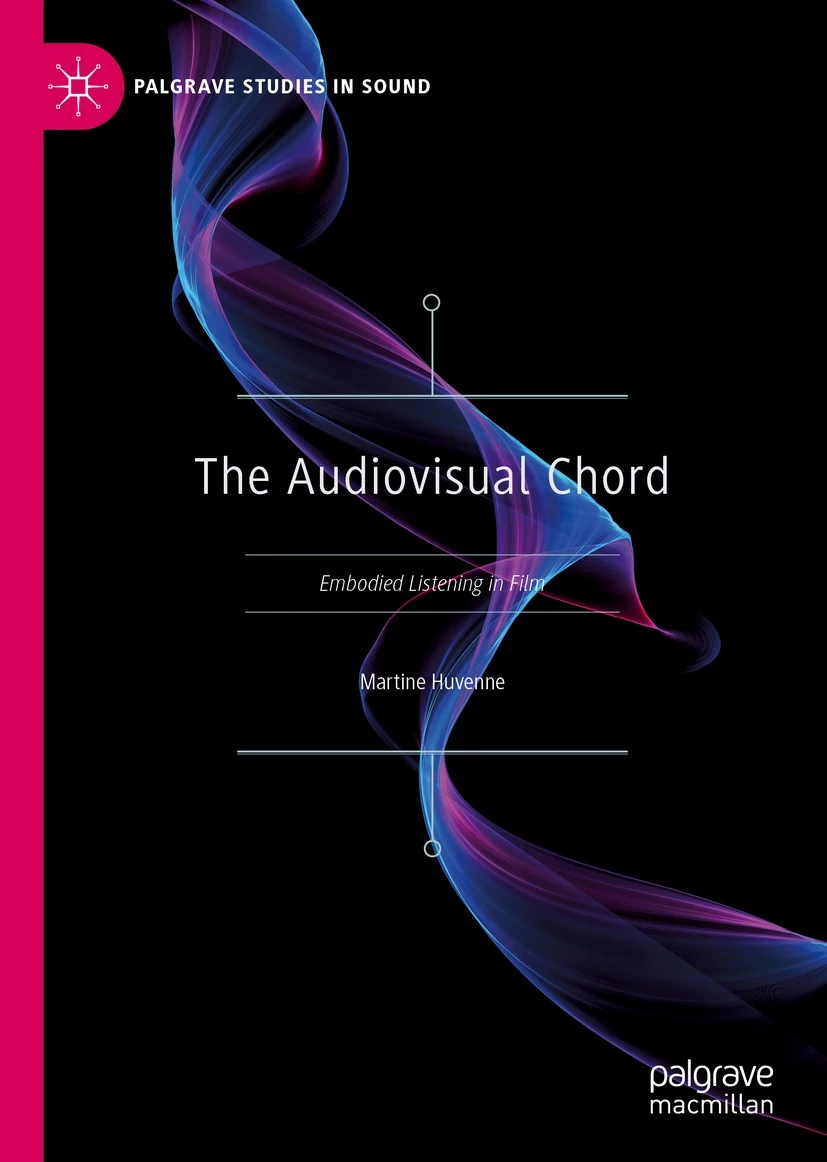
This book is a phenomenological approach to film sound and film as a whole, bringing all sensory impressions together within the body as a sense of movement. This includes embodied listening, felt sound and the audiovisual chord as a dynamic knot of visual and auditory movements. From this perspective, auditory spaces in film can be used as a pivot between an inner and an external world.
Dr. Martine Huvenne retired after a career teaching and researching in the audiovisual field. She was a senior lecturer in Sound and Music for Film at the Kask & Conservatorium (Hogent-Howest), Belgium, where she developed a phenomenological approach to music and listening.
Call for papers: How do you sound design? Articulating experiences and cultures via listening – DRS2024 BOSTON Conference

We are pleased to inform you that the DRS2024 BOSTON Conference is now welcoming submissions.
We invite you to consider submitting to the Theme Track #26:
“How do you sound design? Articulating experiences and cultures via listening”
The theme track is organised by the Special Interest Group on Sound-Driven Design.
The call for papers can be found via the following link: https://www.drs2024.org/theme-tracks/#26
Deadline for paper submission: October 13th, 2023
Notification of acceptance: February 16th, 2024
--------------
ABSTRACT
The SIG on Sound-Driven Design invites researchers and practitioners to delve into the multifaceted nature of sound, unravelling its physical, perceptual, emotional, and socio-technological dimensions, and contribute to the discovery and development of design methods and tools. In the sound-driven perspective, listening emerges as element that adds depth and richness to the design space, adding to the role of the senses in the experience of the form quality of products, services, and systems. We propose to reflect on the holistic and inclusive character of “sound-driven” as it combines the diverse sonic, experiential, technical, and cultural manifestations of sound with the creative, integrative, mitigative, and purposeful essence of designing. We welcome contributions that offer insights and actionable knowledge on the process of sound-driven design by:
- Exploring the sonic and creative aspects, with a focus on the sensory, emotional and aesthetic qualities of the audible embodiment to create unique and innovative sonic identity for projects
- Examining the experiential and integrative aspects, with a focus on how sound enhance and reinforce other sensory cues, such as vision and touch, and ultimately interacts with other design elements to create cohesive and coherent experiences
- Tackling the technical and mitigative aspects, with a focus on the sources and systems that produce unwanted or harmful sound, in order to create more comfortable and healthy environments
- Framing the cultural and purposeful aspects, with a focus on crafting culturally relevant and meaningful sound for specific audience or community, conveying values and practices, bridging communities, and fostering connections among stakeholders
Elif Özcan Vieira
Stefano delle Monache (TU Delft, NL)
Nicolas Misdariss (IRCAM, FR)
New Book review online
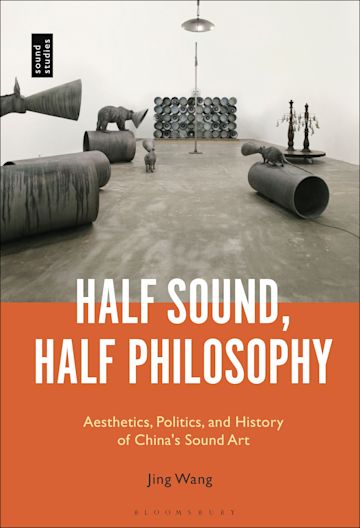
Book review by Bixiao Zhang
New Book review online
Sonic Fiction - Holger Schulze. New York: Bloomsbury 2020
Book review by Vincent Meelberg
Call for Book Chapters: “The Senses and Memory”
Vernon Press invites book chapters for an edited volume on the subject of “The Senses and Memory.”
In the field of sensory studies, the role of memory in sensory perceptions has always been a central preoccupation. From smell’s “Proust effect” to music’s ability to improve memory and mood, the senses are processed in the brain in particular ways that highlight the strong link between remembering and sensing the world. Likewise, the senses work in tandem, through synesthesia, to evoke feelings and sensations of a past event. The body plays a central role in navigating the world, and the senses provide routes to past, at times forgotten, memories.
As sensory studies and memory studies continue to grow and shift as interdisciplinary fields, the overlap between the two demands further investigation. The aim of this edited volume is to dive deeper into the connections that exist between these two fields and to discuss underexplored topics within these areas of study, such as disability in narratives of sensory remembering and the sensory memories of plant and animal life. This volume is searching for creative, interdisciplinary works in the humanities that grapple with topics related to the senses and memory in new, understudied ways.
Questions of importance include: How do the senses evoke memory and convey details of an event? How is sensory memory different from other forms of memory? What is unique about one sense’s ability to evoke memory compared to the other senses? How do new technologies and art reframe the link between the senses and memory? How do mediums (films, texts, paintings, etc.) differ in their portrayal of sensory memory?
Possible topics include, but are not limited to:
• The senses in arts and media
• New technologies
• Disability studies
• Synesthesia
• Nostalgia
• Environmental humanities
• Animal and plant life
• Conflict, violence, memory
• Embodiment
• Creative approaches to sensory memory
If you are interested in contributing to this edited volume, please submit your proposal (500-700 words abstract) along with a short biography (100-150 words) in PDF format by August 1st, 2023 to the book editor, Chanelle Dupuis (chanelle_dupuis@brown.edu).
Proposal acceptance will be notified by September 1st, 2023. Full chapter submissions are to be delivered by February 1st, 2024.
Journal of Sonic Studies - Call for papers
The last decade has witnessed what has been characterised as a material turn in the arts and humanities, which has shifted attention from the role played by language and discourse within culture to that of objects, technologies, materials, and non-human organisms and processes. New ways of thinking about materiality prompted by developments in realist philosophy, including new materialism and speculative realism, have raised important questions about the place of the material in arts and culture, nonhuman agency, the relationship between technology and culture, anthropocentrism, and the environment. However, consideration of the sonic has not always been at the forefront of these discussions – perhaps because sound has been understood to be immaterial or addressed in ontological ways that privilege its sources. In this way materialist approaches to the sonic raise the possibility of rethinking the nature of sound itself, and thereby what is at stake in it.
In this special issue of the Journal of Sonic Studies we will explore how new ways of thinking about materiality might contribute to our understanding of sound, and at the same time how sound might contribute to developing ideas on materiality.
This special issue continues and builds on the journal’s discussion of sonic materiality in its two ‘Materials of Sound’ special issues edited by Caleb Kelly (2018 and 2019) and focuses on two fundamental questions: what is sound’s materiality and what is sonic materialism?
We welcome proposals for both articles and sound artworks that specifically address the issue of sonic materiality. Proposals may engage with, but are not limited to, the following topics:
• What is sound’s materiality, and what is at stake in a critical engagement with sonic materiality?
• How can notions of materiality politicise and historicise thinking about sound?
• What are sound’s material dimensions? Do these relate only to the objects, technologies, bodies and organic and inorganic forms of matter that create, preserve or respond to sound? Or are there ways in which sound (as event, energy or change) might be considered material?
• What new perspectives on the cultures, technologies, politics and ethics of sound are opened up by a consideration of sound’s materiality?
• How do notions of nonhuman agency relate to sound’s materiality? What is at stake in the idea of sonic agency?
• In what ways might creative practice in sound represent a form of ‘material thinking’? How do technological and material processes challenge established forms of creative practice?
• What is a sonic object?
• If the notion of sonic ecology points to the ways in which sound is situated within environments, what does a consideration of materiality bring to this?
• What are the ecological and biopolitical dimensions of sound’s materiality? How might ideas about materiality prompt a reconsideration of the relationship between the human and the nonhuman?
• How might sonic materialism function as a form of nonideal theory, through direct engagement with material objects and practices rather than idealized models of sound?
• How might a critical engagement with sound address the gap between the philosophical and theoretical approaches to materiality and the experienced materiality of sound and sound-related objects and processes?
• How can we create a language of materialism that emerges directly from the materials of sound?
• What might sound contribute to the material turn’s shift to objects, technologies, materials and nonhuman organisms and process? How might this relate to the anthropocentrism inherent in what has been termed the ‘sonic turn’, in which recent discussion of the politics of listening have focused on the human subject.
• How might indigenous perspectives on matter and sound challenge and problematise the so-called “new materialism”?
We would particularly welcome proposals for articles that address these topics from Global South and/or Global Majority perspectives.
Please send your abstract (300 words) and short contributor biography (100 words) to Andy Birtwistle andy.birtwistle@canterbury.ac.uk and Lauren Redhead l.redhead@gold.ac.uk by 30 July 2023
Free online course in sound and audio this summer offered by Barry Truax
Following three very successful previous versions of this course, I am offering to mentor another group of participants in a 12 week online course in sound and audio, starting May 11 and going to July 27. There is no fee for participating.
We will be systematically going through the Tutorial associated with the Handbook for Acoustic Ecology located on the WSP Database, and covering two modules most weeks, one in acoustics, the other in electroacoustics. We’ll meet once a week on Zoom for 2-1/2 hours to discuss these topics, scheduled for 10:30 am – 1 pm PDT on Thursdays (which will be 9 hours later in Central Europe).
This course will be useful as professional development to those wanting to teach sound and audio, as well as graduate students and others who would like to broaden their knowledge across multiple disciplines. If anyone wants to take the course for academic credit, they need to set this up at their own institution and I would supervise it.
The particular strengths (and challenges) of the Tutorial are the parallel modules in acoustics and electroacoustics that emphasize their often ignored links. I would expect participants to be more experienced in one or the other areas, but this course should allow for imbalances in knowledge to be addressed.
The Tutorial and Handbook files can be downloaded by each individual for ease of access, but participants can also use the online version. The preferred browsers are Safari and Firefox (Catalina OS and Chrome also seem to work). Additional software for experimentation will be made available.
Those interested who have the time (I estimate you will need a minimum of 8 hours a week for the webinar and study if you want to take it all in), apart from whatever time would be spent with the personal listening and studio experiments), please contact me at truax@sfu.ca, if you have any questions or would like to view the Tutorial in advance, which I recommend.
Barry Truax (truax@sfu.ca)
Professor Emeritus
Simon Fraser University
New book review online
Engaging with Everyday Sounds - Marcel Cobussen. Cambridge: Open Book Publishers, 2022

Book review by Jean-Paul Thibaud
“Voice and Listening as Techniques for Political Life” – Live hybrid launch event
Accompanying the launch of the latest issue of the Journal of Sonic Studies, a live hybrid launch event will be organised on Friday 10 March, 4-5:30pm GMT (face-to-face at BCU and online on Zoom). Communication is not a one-way street and we want to listen and hear your thoughts as well as to embrace practices of voicing and listening that reflect the values that this special issue is designed to promote.
Online: https://www.eventbrite.co.uk/e/journal-of-studies-special-issue-launch-online-tickets-537829712147
In Person: https://www.eventbrite.co.uk/e/journal-of-sonic-studies-special-issue-launch-in-person-tickets-537897364497
Most of the authors featured in this issue will participate as well.
CFP Sonic Ties: Rethinking Communities and Collectives

isaScience 2023, mdw – University for Music and Performing Arts Vienna
Reichenau/Rax, Austria and online, 26-30 August 2023
Keynote Lectures by Srđan Atanasovski, Center for Comparative Conflict Studies (CFCCS), Belgrade,Alexandrine Boudreault-Fournier, University of Alberta, Sumanth Gopinath, University of Minnesota, and Ana Hofman, ZRC SAZU Institute of Culture and Memory Studies, Ljubljana
Sound and social relations are tightly interwoven and oftentimes contingent upon each other. ‘Sonic Ties’ offers a lens through which to study the qualities of connection and intersubjectivity that arise through sound. isaScience 2023 invites you to explore ‘Sonic Ties’ as a central mode of sharing communality and experiencing collectivity through music, dance, and other phenomena of performance and cultural expression.
By focusing on this specific mode of relating the sonic and the social, mdw’s interdisciplinary, international conference investigates how sound shapes collectives and communities in different societal, historical, and geopolitical contexts, and the ways in which these sonic ties reflect back on the individuals involved. Looking at communities and collectives from social movements to musical ensembles, from ethnic communities to artist collectives, isaScience 2023 seeks to investigate the entanglements of sound and power relations. What are the different forms and degrees of sonic participation and to what extent are they tied to local or globalized experiences?
We welcome proposals from a wide range of disciplinary perspectives including, but not limited to, Queer Theory, Musicology, Cultural Studies, Music Theory, Indigenous Studies, Music Sociology, Critical Race Studies, Ethnomusicology, Popular Music Studies, Dance and Performance Studies, Post-Colonial Studies, and Film and Media Studies.
Possible topics may include:
- The reproduction or subversion of hegemonic social structures in sonic communities and collectives
- The relation of sound and music to political activism (from the labour movement to decolonisation struggles, from feminist protests to critical mass bike rides)
- Exile, diaspora, and collective memory: how communities pass on their sonic legacy across history and ruptures of displacement and create forms of sonic belonging
- The relation between musical communities and collectives and the tradition or innovation of musical and performance styles, idioms, and aesthetics (from historical to contemporary contexts)
- Negotiations of identity and social status in and through the participation in communities and collectives (e.g. racialization through sound, sonic dimensions of queerness)
- The effects of sonic ties in various musical styles and genres: e.g. from ethnic reckoning in traditional music to (sub)cultural distinction in popular music to elite formation in classical art music
- The impact of digitality on social structures through new (social) media or technologies
- Collective practices of listening and their impact on the social (from phonograph gatherings to punk concerts, from soundwalks to the social experience of fandom)
- Sound and public space: how the right to the city is claimed or contested in sonic terms
- Communality through sound in relation to rurality, vernacularity, and regional communities
- Questions of methodology: from collective authorship to the reflection of approaches and research practices, particularly the academic categorization of and its influence on communities
Contributions can include paper presentations (20 minutes plus discussion), panels, lecture performances, workshops, or other, innovative formats. Online contributions are possible.
Abstracts must clearly state your research question(s), theoretical framework, methodology, and presentation format. Please include max. 5 keywords.
Please submit your abstract in English (max. 300 words including references), a short biography (max. 100 words), and your institutional affiliation or location by 5 March 2023 in a single PDF file to isascience@mdw.ac.at
Decisions on the acceptance of proposals will be announced in April 2023.
isaScience is mdw’s international hybrid conference for interdisciplinary research on music and performing arts. It is held annually at Hotel Marienhof in Reichenau an der Rax, an hour outside of Vienna in the Semmering region, which is also home to mdw’s International Summer Academy isa. The conference’s conclave-like setting aims to foster intensive exchange between researchers in a relaxed atmosphere. The conference’s hybrid mode allows for active and passive online participation.
Academic Board: Andrea Glauser, Marko Kölbl, Stephanie Probst
Registration is free of charge. Complementary funding for travel and accommodation costs is available after acceptance of the proposal on a case-by-case basis.
mdw – University of Music and Performing Arts Vienna covers lunch and coffee breaks on-site.
Contact: Kathrin Heinrich isascience@mdw.ac.at
Websites: https://www.isa-music.org/de/isascience/ & mdw.ac.at/isascience
contact: isascience@mdw.ac.at
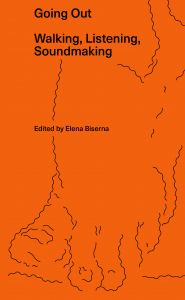
New book publication – Going out. Walking, Listening, Soundmaking
|
author and editor: Elena Biserna
coeditors: Caroline Profanter, Henry Andersen, Julia Eckhardt
|
umland editions, Brussels, 2022
English edition 13 x 21 cm (softcover) 580 pages – 34 euros ISBN : 978-90-8264-956-7 EAN : 9789082649567 |
An anthology that traces the long legacy of interdisciplinary experimentations at the intersection of walking, listening, and soundmaking.
Since the 1960s, the act of walking has provided a way for artists and musicians to escape the formality of the concert hall or institutional venue, engaging with shifting public spaces, natural environments, and the social and political sphere. Walking redefines notions of composer, performer, public, and music itself, while opening new modes of perception and action. Going Out addresses these developments by exploring the relationship between walking, listening, and soundmaking in the arts—from the first soundwalks and itinerant performances in the 1960s to today's manifold ambulatory projects.
The book consists of an extensive essay by Elena Biserna followed by an anthology of historical and contemporary contributions in the form of documentation, essays, interviews, manifestos, scores, narratives, and reflections. Through the variety of these contributions, the book makes an argument that at the intersection of walking, listening, and soundmaking there is both a long legacy of interdisciplinary experimentations and a broad field that resounds with urgent issues in critical spatial thinking and practice.
Contributions from: Max Neuhaus, Willem de Ridder, William Levy, Collective Actions Group, David Helbich, Janet Cardiff, Jacek Smolicki, Carolyn Chen, Tao G. Vrhovec Sambolec, Hildegard Westerkamp, Albert Mayr, Tim Ingold, Akio Suzuki, katrinem, Beatrice Ferrara & Leandro Pisano, Catherine Clover, AM Kanngieser, Gascia Ouzounian & Sarah Lappin, Ultra-red, Vivian Caccuri, Stefan Szczelkun, LIGNA, Edyta Jarząb, Oupa Sibeko, Brian Hioe, Brandon LaBelle, Adrian Piper, Andra McCartney & Sandra Gabriele, Amanda Gutiérrez, Jennifer Lynn Stoever, Stephanie Springgay, Carmen Papalia, Christine Sun Kim, Charles Eppley, Budhaditya Chattopadhyay, Viv Corringham, BNA-BBOT, Ella Parry-Davies & Ann, Mendi + Keith Obadike, Gwenola Wagon & Stéphane Degoutin, Eleni Ikoniadou, Justin Bennett, Christina Kubisch & Christoph Cox, RYBN, Alisa Oleva, Naomi Waltham-Smith, Anna Raimondo, Libby Harward.
Copy-editing: Jacob Blandy
Graphic design: Ines Cox.
Translations: Italian: Allison Grimaldi Donahue, Piero Bisello; French: Aubrey Birch; Portuguese: Miguel Carvalho.
Distributed by Les presses du reel
Sound Arguments - Presentation
Sound Arguments is an innovative laboratory-atelier for creative artists dealing with sound. Presented by the Orpheus Institute, Ghent (BE), and ACPA, University of Leiden (NL), Sound Arguments transcends the boundaries of art school or conservatory, art space or university to propose a new kind of creating-researching-learning community. It reaches into the broad and complex space of current art-sound practices. At Sound Arguments, artists will share, invent, learn and discuss.
Our creative, imaginative relationship with sound has entered a fantastically rich period, facilitated and necessitated by cultural, social and technological evolution. Sound acts as a new parameter in a world evolved from the practices and theory of the visual arts or as a highly sophisticated art form in music composition and improvisation. It acts as a dimension of the plastic, installation and interactive arts. It provides a perspective on place, is a vital component of environmental art and a conveyor of information through sonification. It emerges as algorithmic surface, as the trace of virtuoso improvised performance or of informal social behaviour. And it provides an interface with technology.
Each of these perspectives has its own discourse, practices, techniques, cultural infrastructure and institutions. Sound Arguments is a locus for this rich tapestry, a space that aims to bring together sound artists with diverse, and complementary, backgrounds. Through sustained cross-fertilisation, they will participate in the evolution of new common discourse and individual critical practice. At each of five monthly, two-day encounters you will meet and discuss with invited artists and experts, addressing issues from the abstract to the technical, from the social to the practical. Guest artists will act as catalysts for sharing and reflection between participants; you will acquire new techniques in workshops led by international experts, to stimulate and inform practice. All participants will be able to share their own projects in a wide-ranging, critical and supportive environment. As a community, we will expand horizons, vision and practice – and together hopefully evolve new discourse on contemporary sound-based practices.
Topics include:
# Hardware hacking & DIY electronics # Live coding & creative coding # Digital fabrication & 3D printing # The body in performance # Field recording # Alternative spaces and venues # Sound art theory and practice # The audio paper # Sound installation # Notation
Guests for the series will include: Cecilia Arditto, Alexandra Cárdenas, Nicolas Collins, Julia Eckhardt, Sanne Krogh Groth, Cathy Lane, Marcela Lucatelli, Matteo Marangoni, Caeso and Guy van Belle.
REGISTRATION --------------------
Sound Arguments will meet monthly from February – June 2023. Meetings will be held alternately in Ghent and Leiden, with the first meeting in Den Haag, February 27-28. Sessions will run on Mondays 14:00-18:00 and Tuesdays 09:00-15:00.
2023 dates:
# February 27-28 # March 27-28 # April 17-18 # May 15-16 # June 5-6
The nature of this series is such that numbers must be limited. Prospective participants are invited to apply by responding to this call at:
https://airtable.com/shrxaL1PH2FP7cwjn
The form requests a brief description of the role of sound in your practice, which will allow us to balance the series appropriately. Application is open until 16 January. Applicants will be notified by January 25.
Sound Arguments is made available at no cost to participants, regardless of institutional affiliation. At Sound Arguments we aim to create a safe and inclusive environment for all those involved; we particularly encourage applications from historically under-represented groups in the field. As organisers, we commit to taking that into account during evaluation of the applications received.
General inquiries can be sent to soundarguments@orpheusintituut.be
We look forward to meeting you!
Magno Caliman (Orpheus Instituut)
Marcel Cobussen (Academy of Creative and Performance Arts - Leiden University)
Jonathan Impett (Orpheus Instituut)
New Book review online
Book review by Matt Lewis
CFP | WFAE 2023 Conference Listening Pasts - Listening Futures
Atlantic Center for the Arts is honored to partner with the World Forum for Acoustic Ecology for our 30th anniversary conference, Listening Pasts - Listening Futures.
This is an unprecedented opportunity to highlight the local and global work being done in the field of soundscape studies and acoustic ecology.
Submissions for papers, music, workshops, and installation proposals will accepted until October 15.
For details on the location, themes, registration, and CFP please visit
https://www.wfae.net/conference2023.html
Journal of Sonic Studies 22 is Online
JSS22 is the second special issue of the Journal of Sonic Studies on the topic Sound at Home. In the original call for papers, we asked scholars from a variety of disciplines to engage with home sounds – everyday sounds such as the hum of appliances, the babble of water piping, the chatter of media or the creaking of a wooden floor; sounds that seep in from other homes and from the world outside (traffic, music, shouting, etc.); disconcerting, unfamiliar sounds of places that have become a temporary home; or sounds that go unheard in their familiarity – using a wide range of approaches and methods. This second issue consists of contributions dealing with a number of closely related topics, namely, the home in its relation to the outside world, sonic communities within or in spite of isolation, and vocal expression as part of or in defiance of this isolation.
Table of Contents:
Multiple Perceptions of the Everyday Unfolded: The Case Study of Sunnyside - Matilde Meireles
Sonic Relations as Bulging Spheres - Sandra Lori Petersen
Aural Expectations of Home: An Autoethnography of the Amazon Echo Smart Speaker - Stephen J. Neville
Overhearing the Unheimlich Home: Power and Proximity in “Shut Up Little Man!” - Hannah Spaulding
Composing the Field of Dwelling: An Autoethnography on Listening in the Home - Iain Findlay-Walsh
Room Ambience: Home as Heard in Film and Media Arts - Budhaditya Chattopadhyay
How can sound and music participate in protest without access to the streets and spaces of collective music creation? How does a collective sound when there is no actual gathering possible? Alternatively, when social movements take to the streets or occupy a territory despite public health regulations – as has happened on many occasions around the globe since the beginning of the pandemic (Black Lives Matter, Wet’suwet’en resistance, Belarus, Poland, Chile, Myanmar, The Netherlands, to mention only few) – what has changed on a sonic level? How can sound and music testify to the ways our current isolation has affected our capacity to collectively organize? And in this context, what can sound-based practices grounded in improvisation bring to the ongoing social and political struggles? (We conceive of music, protest and community very widely, and accordingly think of this event as a meeting point for artists, activists and researchers to reflect and share perspectives on these issues.)
We will have the pleasure to welcome Dont Rhine, co-founder of the international sound art and social intervention collective Ultra-red, as keynote speaker. Confirmed performers for the November 19 evening include Marilou Craft & Elyze Venne Deshaies, Joseph Bohigian and Geoff Mitchell & Kevin McNeilly, among others.
Please find attached the schedule for the event. For more infos: https://www.facebook.com/events/997286244181987
We acknowledge that this event will be held on an unceded territory which is used as a place of encounter and exchange between many First Nations, including the Kanien'kehá:ka, Huron/Wendat, Abenaki and Anishinabeeg.
Journal of Sonic Studies - Call for Papers: Sound in the (Post-)Soviet Realm
When an empire falls, does it make a sound? And who is there to hear it?
The sonic history of the USSR and the Post-Soviet realm that succeeded it, is rich and turbulent. The 2013 book Sound in Z by Andrey Smirnov introduced the world to the daring sound experiments of the Soviet avant-gardists of the 1920s. From the city-wide noise symphonies of Arseny Avraamov to the first electronic instruments of Leon Theremin to experiments with sounds drawn on paper or film, the futuristic optimism of the first decade following the revolution unleashed an explosion of sonic artistry. While the strict censorship and state control over the arts forced sound artists underground or into applied work, the Soviet sonic creativity persisted on the margins, or even wholly outside, of the state-controlled art world: in the kinetic sound sculptures of the Dvizhenie art group, the explorations of light and sound by the researchers of the Prometheus Institute, or the extravagant performances of the Pop-Mechanics movement, for example.
However, the familiar history of the Soviet culture being shaped by the antagonism between official state-sanctioned art institutions and underground art communities conceals a different, colonial narrative. In the colonial structures of the contemporary world, the position of the Post-Soviet realm remains ambiguous: not quite part of the Global North, yet not fully in the Global South. Decolonial scholars investigating the Post-Soviet have called Russia/USSR a “subaltern empire” (Morozov 2015) or “poor North” (Tlostanova 2011), shedding light on the double oppression of its colonies: “the South of the poor North.” While sound art from the Russian capitals of Moscow and St. Petersburg/Leningrad is slowly being integrated into global sound histories, much less is known about the sound cultures and art of the Russian and Soviet colonies, both former – such as Kazakhstan or Georgia – and extant – the lands of Siberia and the Russian Far East.
In this issue of the Journal of Sonic Studies we will explore how these entanglements of coloniality, ideology, creativity, and resistance are reflected in the sound culture and art from the Soviet and Post-Soviet realm. We welcome article proposals related to, but not limited to, the following topics:
● Sound art and sound poetry from the USSR and Post-Soviet territories
● Soviet and Post-Soviet soundscapes, between megacities and tundras
● Indigenous sound cultures of Siberia, (Post-)Soviet Asia and the Caucasus
● Sound cultures of ethnic groups in USSR and contemporary Russia
● Sound and music of the Soviet Underground in capitals, provinces, and national republics
● Sound design in Soviet and Post-Soviet cinema
● Soviet instrumental inventions: from the ANS synthesizer to the electronic bayan “Topaz”
● Soundscapes of military aggression and resistance in the Post-Soviet realm: in Donbass, Abkhazia, and Nagorno-Karabakh, for example
● Ideological implications of indoor and outdoor sonic practices
● Sound in Soviet and Post-Soviet architecture and urban planning
● Sacred and secular sounds in Soviet and Post-Soviet environments
● Sound, music, and politics in the USSR and Post-Soviet countries
● Sound in Soviet and Post-Soviet academic communities
Please send your abstract (300 words) and short contributor biography (100 words) to Vadim Keylin vadim.keylin@uni-hamburg.de and Ksenia Mayorova kmayorova@hse.ru by 15.01.2022
Rotting sounds symposium, September 23+24, 2021
Since 2018, the project of artistic research Rotting sounds – Embracing the temporal deterioration of digital audio has been researching transformation processes pertaining to the diverse interrelations of digitally encoded information in the audio domain, its material properties and (human) interpretation within a sociocultural context. This symposium shall provide a room for reflection on the acquired experiences in the course of the project, bring in external viewpoints on the relevant topics and stimulate outlooks beyond the limits of current research.
Rotting sounds is a cooperation between the University of Music and Performing Arts Vienna, the University of Applied Arts Vienna and the Academy of Fine Arts Vienna and is funded by the Austria science fund (FWF project AR445).
The symposium will take place in presence at the mdw campus (registration required!) and will also be streamed through http://rottingsounds.org.
mdw – University of Music and Performing Arts Vienna
Anton-von-Webern Platz 1
1030 Wien, Austria